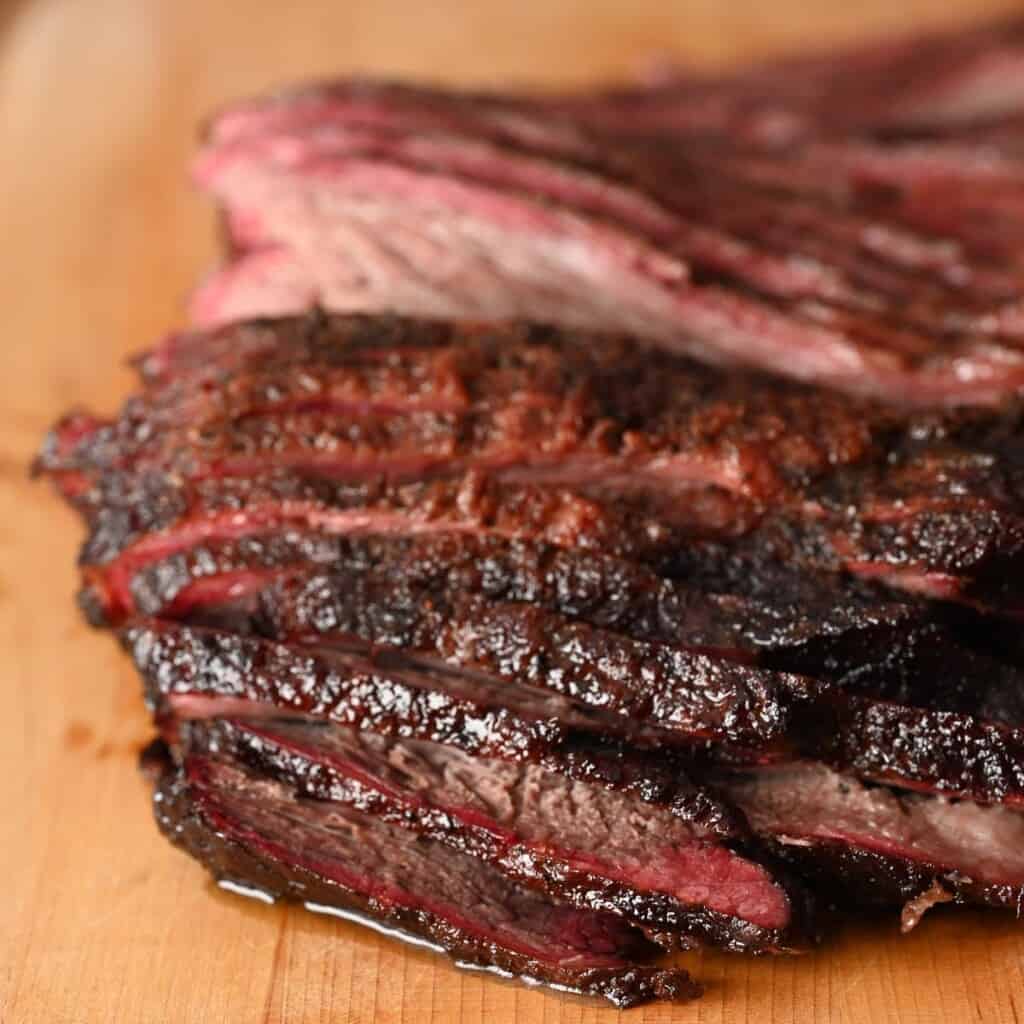
Smoked Brisket Recipe
Servings :20
EQUIPMENT
- Kamado Joe Smoker or the smoker of you choice
- lump charcoal
- hardwood chunks
- pink butcher paper
- cloth glove liners
- nitrile gloves
- brisket knife
- boning knife
INGREDIENTS
- 10 to 14 pound brisket full packer [note 1]
- kosher salt or fine sea salt
- black pepper freshly ground
INSTRUCTIONS
The day before smoking your brisket
- Prepare the brisket: Start by rinsing the brisket in cool water and patting it dry.
- Trim the brisket: Trim off any excess fat. Leave an even layer of fat on the fat side of the brisket. The fat layer can be as thick as a half an inch.
- Season the brisket: Season the brisket generously with salt and pepper. Allow the brisket to sit in the fridge overnight. This resting period allowed the seasoning to penetrate the meat. This is an important step for flavor as well as bark development. [note 2]
The day of your smoke
- Plan ahead: Allow about 1 hour per pound of brisket for smoking time. Usually 10 to 14 hours.
- Prepare the smoker: Set up your smoker by adding enough lump charcoal for a long smoke. Fill the basket in your ceramic grill to the top. Light the fire. Once the fire has gotten started, close the lid of the ceramic grill and bring the temperature to 225 to 250℉. You want the dome of the ceramic grill to be relatively warm to the touch. Preheating the dome of your smoker will endure a stable, constant cooking temperature. [note 3]
- Set the air gaps in the bottom vent and the chimney: The bottom should be open about 1 finger width. The top should be open halfway to the first tick mark. This is a little less than a finger width.
- Add the hardwood: Once the smoker has come up to temperature, add 4 of 5 large lumps of hardwood. Close the dome again and let the grill come back to temperature. The dome thermometer should read between 225 to 250℉, and the smoke coming from the chimney should be clean.
Smoking The Brisket
- Start smoking: Add the brisket to the smoker and insert a probe thermometer if you're using one. Close the lid. [note 4]
- First Stop 165℉: Let the meat cook on the smoker until its internal temperature reaches 165℉.
- Wrap the brisket: When the brisket reaches 165℉, it's time to pull it off, remove the probe thermometer, and wrap it tightly with pink butcher paper. [note 5] Reinsert the probe thermometer through the paper. Place it back in the smoker. ** Make sure to close the smoker's lid while wrapping the meat. Too much air can cause the fire to get too hot.
- Next Stop 193 to 203℉: Continue to smoke the brisket until the internal temperature reaches a temperature between 193 to 203℉. At 193℉ the brisket will still be relatively firm but still very tender. At 203℉ the brisket will be very tender, nearly falling apart. Either is acceptable and you can also find a temperature that falls in between.
- Rest the brisket: Rest the brisket for 30 minutes to an hour before slicing.
RECIPE TIPS
- This recipe calls for a full-packer brisket. This includes the untrimmed point and flat. You can also choose a smaller cut and experiment with smoking either the pint of the flat.
- This method of seasoning is known as dry brining. To learn more, check out this post on dry-brined smoked turkey. Check out my other recipes for seasoning blends and find a new favorite.
- This recipe was smoked using a Kamado Joe ceramic grill. But you can use any smoker that you like. Just follow the setup instructions for your favorite smoker.
- Probe thermometer (affiliate link): I use a Thermoworks Signals electronic probe thermometer whenever I am smoking meat. I highly recommend it. Check out their line of products.
- Butcher paper vs. Foil: A lot of recipes call for foil when you are doing smoked meat. I highly recommend butcher paper because it allows more steam to escape. Foil can leave your meat too mushy, in my opinion.