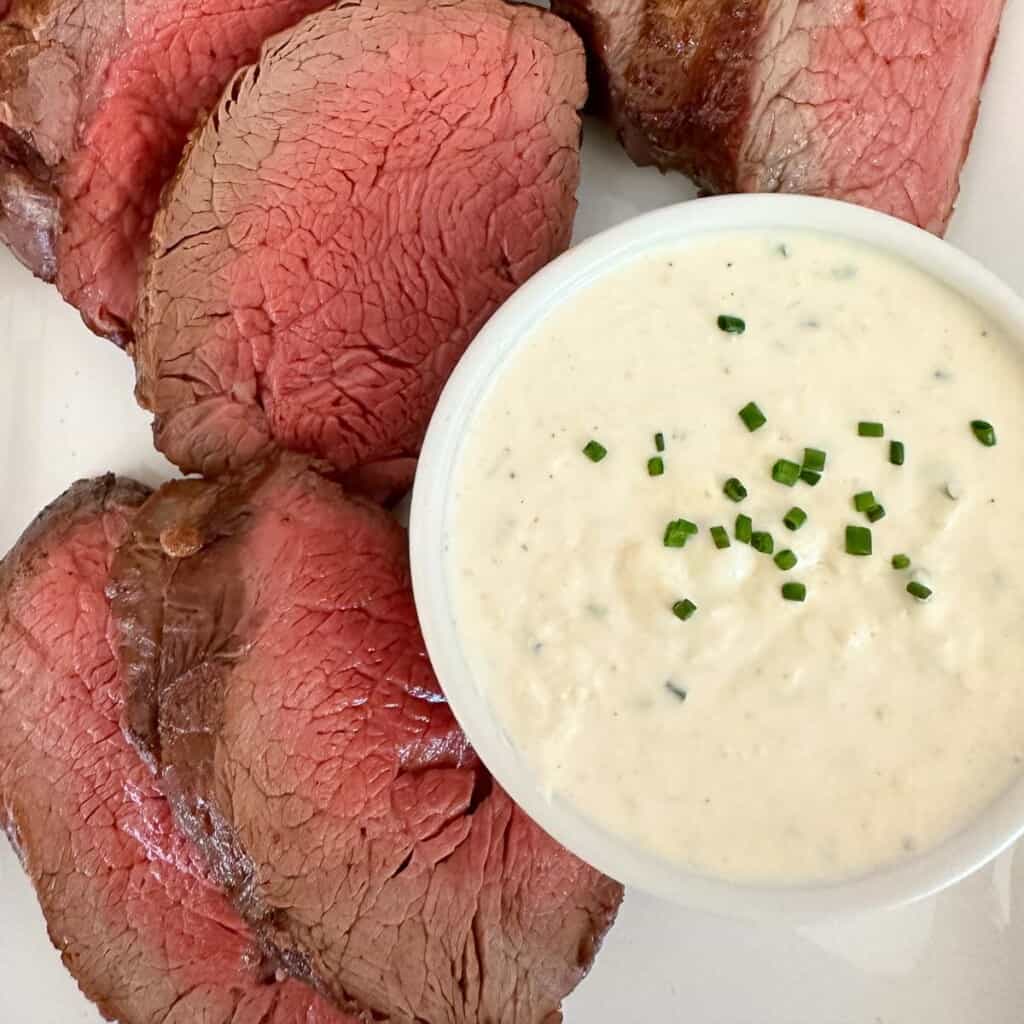
Slow Roasted Beef Tenderloin
Servings :6
EQUIPMENT
- kitchen twine
- cast iron pan
- probe thermometer
- wire rack
- heavy rimmed baking sheet
INGREDIENTS
- 2 to 3 lbs beef tenderloin roast full roast or center cut [note 1]
- kosher salt
- freshly ground black pepper
Seasoned Herb Butter
- unsalted butter [note 2]
- fresh thyme
- fresh rosemary
- shallot
- garlic
For Serving
- fresh chives finely minced
- fleur de sel or maldon salt
- Horseradish Cream
INSTRUCTIONS
- The day before: Prepare the roast by tying it with butcher's string and seasoning it well with salt and pepper. Place the seasoned roast on a wire rack set over a heavy baking sheet. Place the roast into the fridge and let it sit overnight to dry brine. [note 3]
- When you're ready to cook: Place the oven rack in the center position of the oven. Preheat the oven to 225℉ (107℃). Place the roast in the oven and cook until the internal temperature reaches 120℉ (49℃).
- Rest for 10 minutes: Remove the roast from the oven and set it aside to rest for 10 minutes. Remove the butcher's twine and get ready to finish the roast in a skillet or under the broiler.
- Prepare the herb butter: Add the butter to a skillet and heat over medium heat until the butter is lightly browned. Add the fresh herbs and the shallots.
- To finish in the skillet: Add the roast to the skillet, and use a spoon to distribute the butter over the roast. Turn the roast every 30 seconds until you have a nicely browned outer crust. It takes about 1 to 2 minutes. The internal temperature should be 125℉ (52℃) for rare and 130℉ (54℃) for medium rare.
- To finish under the broiler: Adjust the oven rack to sit 6 inches from the broiler. Pour over the butter and herb mixture. Place the roast under the broiler. Turn the roast every 30 seconds until you have a nicely browned outer crust. It takes about 1 to 2 minutes. The internal temperature should be 125℉ (52℃) for rare and 130℉ (54℃) for medium rare.
- Resting: Because this roast is slow-roasted at a lower temperature, it does not need to have s significant resting time before slicing.
- Serve: Serve with Horseradish Cream Sauce, fresh chives and a sprinkle of coarse salt, such as fleur de sel or Maldon salt.
RECIPE TIPS
- I used the center cut for this recipe. However, this recipe can be made with a whole tenderloin roast (serves 10 to 12) or the smaller center-cut chateaubriand (serves 4 to 6). Ask your butcher to trim the roast to save time.
- You can vary the fresh herbs that are used for the herb butter. The browned butter gives the roast a beautiful color and flavor.
- The overnight dry brining serves two purposes. It dries out the outside of the roast to encourage better browning and adds flavor through osmotic diffusion.