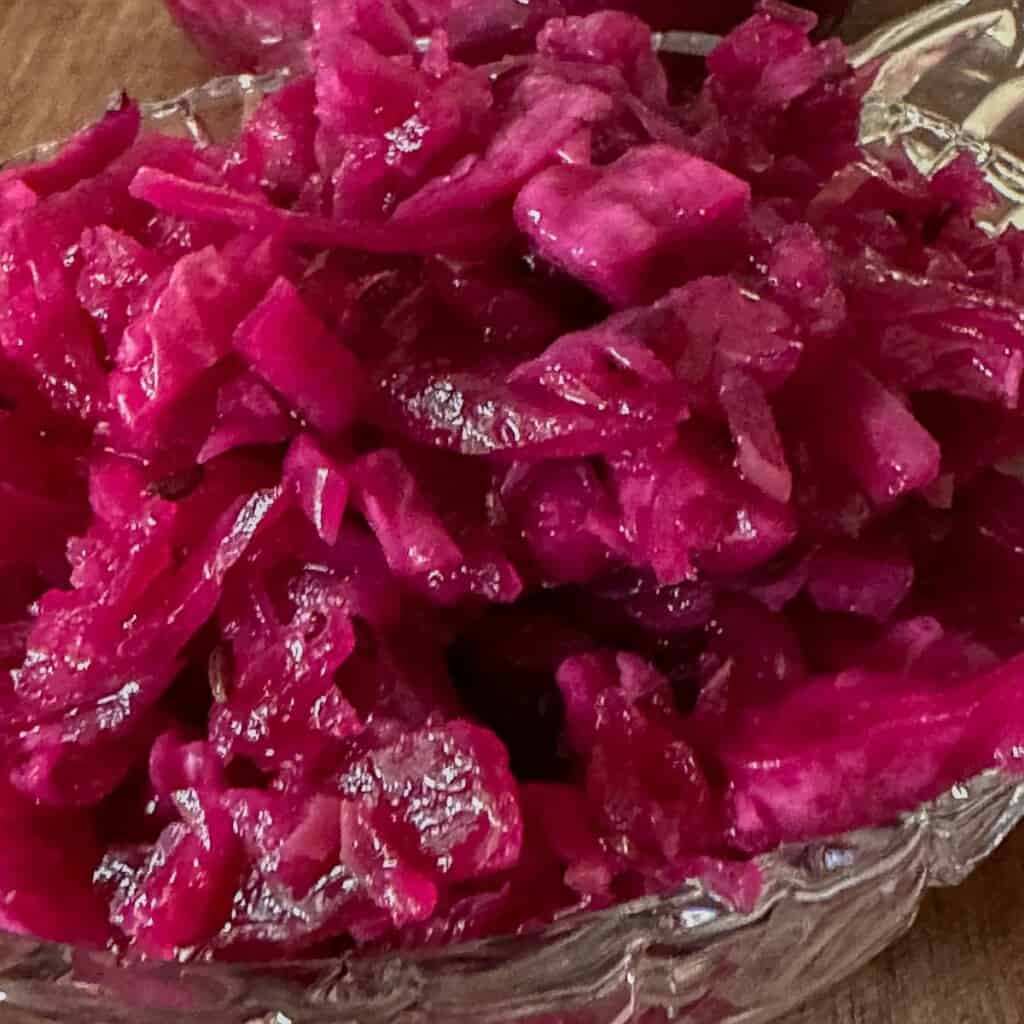
Tangy Homemade Red Sauerkraut Recipe
Servings :12 servings
EQUIPMENT
- fermentation weights (affiliate link)
- airlock lids (affiliate link)
- wide mouth mason jars (affiliate link)
INGREDIENTS
- 1 head red cabbage thinly sliced
- 1 tart apple thinly sliced
- 1 white onion thinly sliced
- 1 teaspoon caraway seeds
- 1 tablespoon unrefined salt adjust the salt to weight
INSTRUCTIONS
- Remove the outer leaves from the cabbage and set them aside. Cut the cabbage in half, remove the core, and thinly slice the cabbage using a knife or mandoline slicer. Place the sliced cabbage in a large bowl.1 head red cabbage
- Add salt to the cabbage, approximately one tablespoon per 800 grams of cabbage, depending on personal preference. Massage the salt into the cabbage with clean hands, squeezing and kneading it for about 10 minutes until it starts releasing its liquid.1 tablespoon unrefined salt
- Slice the apple and the onion. Add it to the cabbage. Add caraway seeds and toss to combine.1 tart apple, 1 white onion, 1 teaspoon caraway seeds
- Transfer the salted cabbage and its liquid into the vessel, packing it tightly to eliminate air pockets. Pour any remaining liquid into the vessel, completely submerging the cabbage.
- Place one or two of the reserved outer cabbage leaves on top of the sliced cabbage to act as a barrier, preventing exposure to air. Place a weight on top of the leaves to keep the cabbage submerged.
- Cover the fermentation vessel with a breathable cloth or lid to allow gases to escape while keeping out airborne contaminants. Store the vessel in a cool, dark place, ideally between 65-75°F (18-24°C).
- Allow the red cabbage sauerkraut to ferment for at least one to two weeks, depending on your desired taste and texture. Check the sauerkraut regularly, removing any mold or scum that may form on the surface.
- Once the fermentation period is complete, taste the sauerkraut to ensure it has reached your preferred level of tanginess. If desired, transfer the sauerkraut to smaller jars and refrigerate to slow the fermentation process
RECIPE TIPS
- Salt: Use unrefined salts such as fine sea salt, Himalayan salt, or Redmond's real salt. Never use iodized table salt for fermenting.
NUTRITION
Serving: 0.25 cup | Calories: 30kcal | Carbohydrates: 7g | Protein: 1g | Fat: 0.2g | Saturated Fat: 0.02g | Sodium: 600mg | Fiber: 2g | Sugar: 4g | Calcium: 34mg | Iron: 1mg